If shift scheduling feels brutal every single time, it isn't because you're disorganized.
It's because there are simply too many conditions for a human to solve by hand. This article breaks down where the hours actually go — and what it means to solve the problem with a system instead of willpower.
🎉 Now live
Shiftaru is officially live. The free practice mode (sample data) needs no signup.
👉 https://shiftaru.com
Prefer to watch first? A full walkthrough in the free practice mode, from raw requests to a finished schedule.
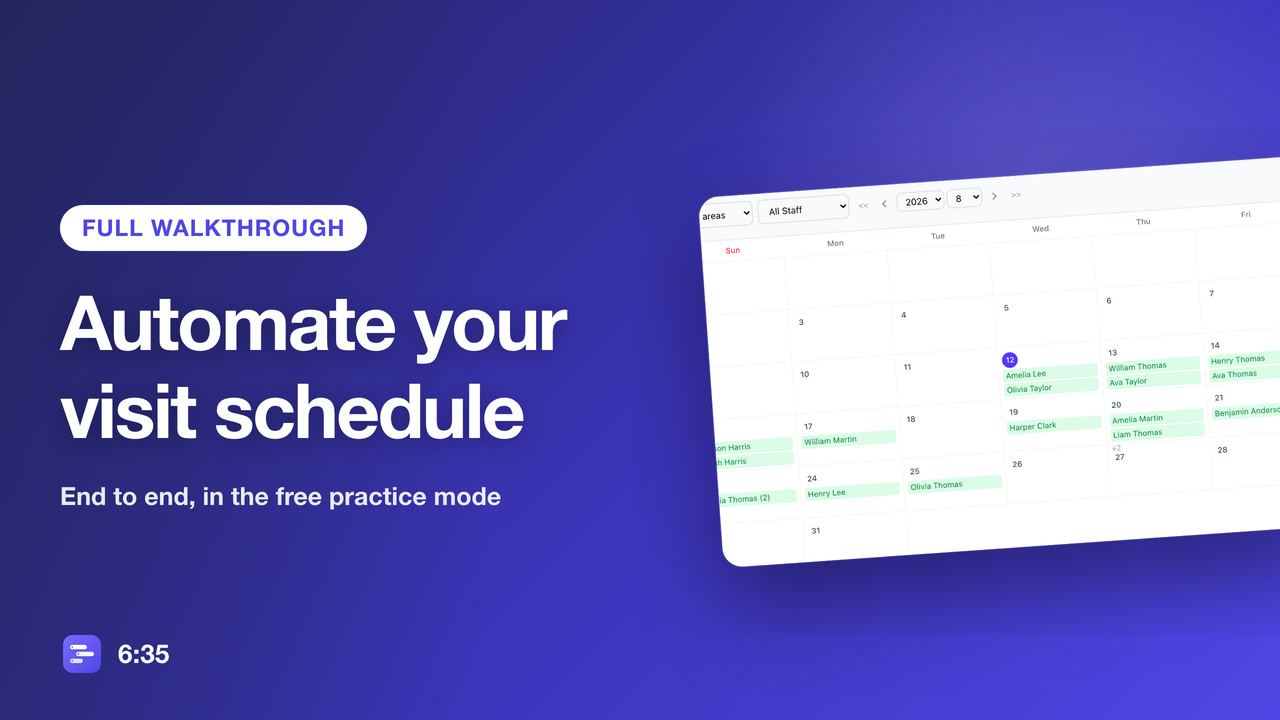
▶ Watch the full walkthrough (6:35)
Sunday night. You're building next week's schedule.
Requests by text, a few mentioned in person, a couple by email. You copy them all into one sheet and start placing people into open slots. About halfway through, someone messages you: that day no longer works.
You clear the slot, and three other people shift.
There's a part of scheduling nobody talks about: sitting down and matching every customer's requested date/time against every staff member's availability, one pair at a time.
Dispatching photographers. Pairing tutors with students. Assigning home-care visits. Filling headcount at a store — different industries, same underlying job. You're solving a puzzle in your head: who goes where, and when.
Why matching schedules is genuinely hard
When you build a schedule by hand, you're juggling several constraints at once:
- Requested date/time — the customer's first, second, and third choices
- Area — is it within travel range? You want the closest person.
- Skills — can they handle this service or subject? Do they hold the required certification?
- Workload caps — has this person already worked too much today? Are they over their weekly limit?
- Conflicts — double bookings, plus enough time for travel and breaks
At 10 customers and 10 staff, you can brute-force it.
But the moment the numbers grow, the combinations explode, and you hit the state every scheduler knows: move one person, and three others have to move too. That Sunday night at the top of this post is exactly that.
And you start from zero every time. Requests change weekly. Availability changes weekly. Last week's answer is worthless this week.
The three places your time disappears
- Collecting requests — they arrive by text, in person, by email, in ten different formats, and you retype them all into a spreadsheet
- Matching — hunting by hand for combinations that satisfy every constraint
- Redoing it — one person's plans change and you rebuild the whole thing
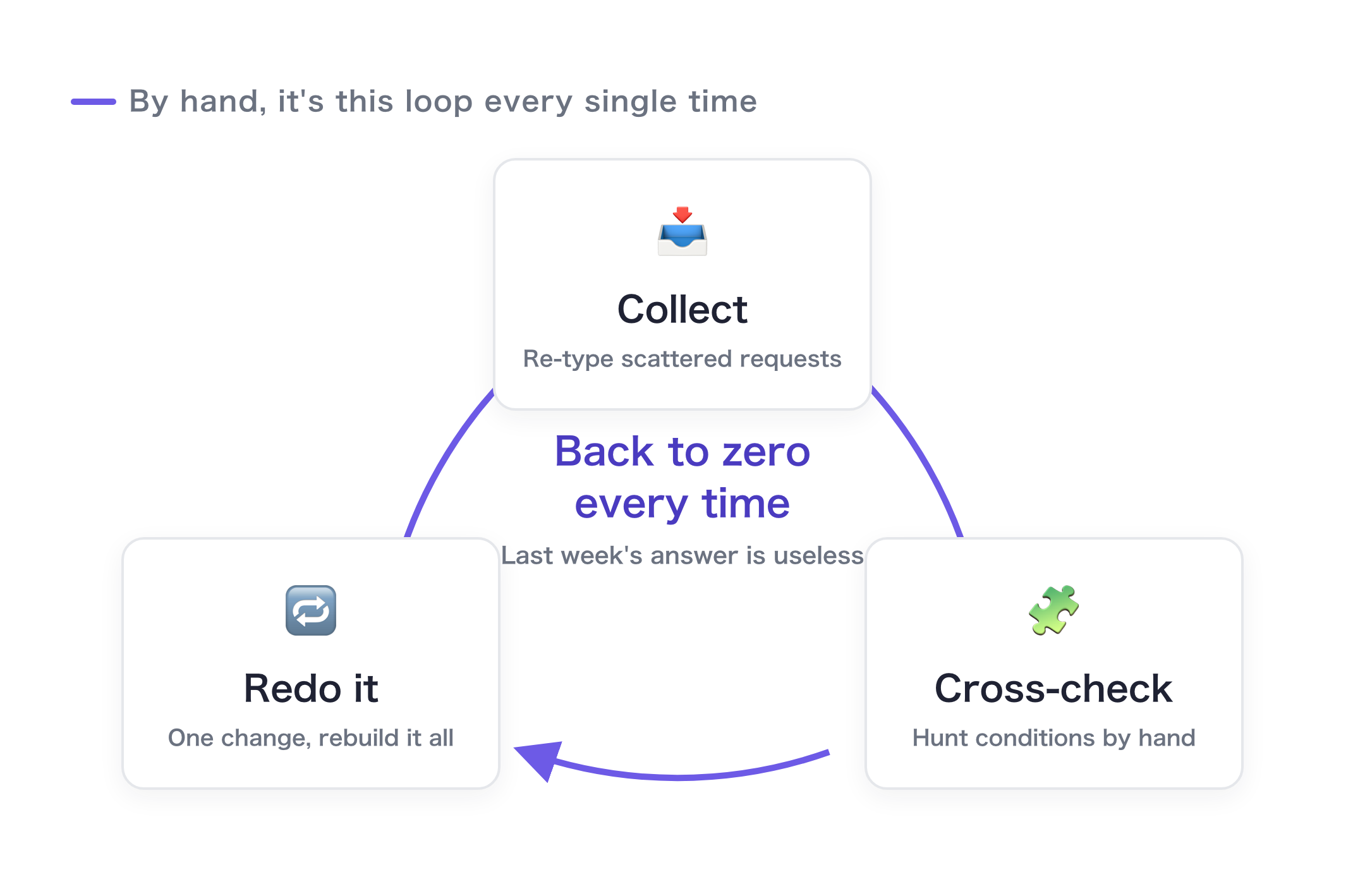
Step 1 shrinks if you standardize how requests come in. Steps 2 and 3 disappear almost entirely if you hand the constraints to a machine — leaving you with just a final review and a few tweaks.
What "solve it with a system" means
It comes down to two moves.
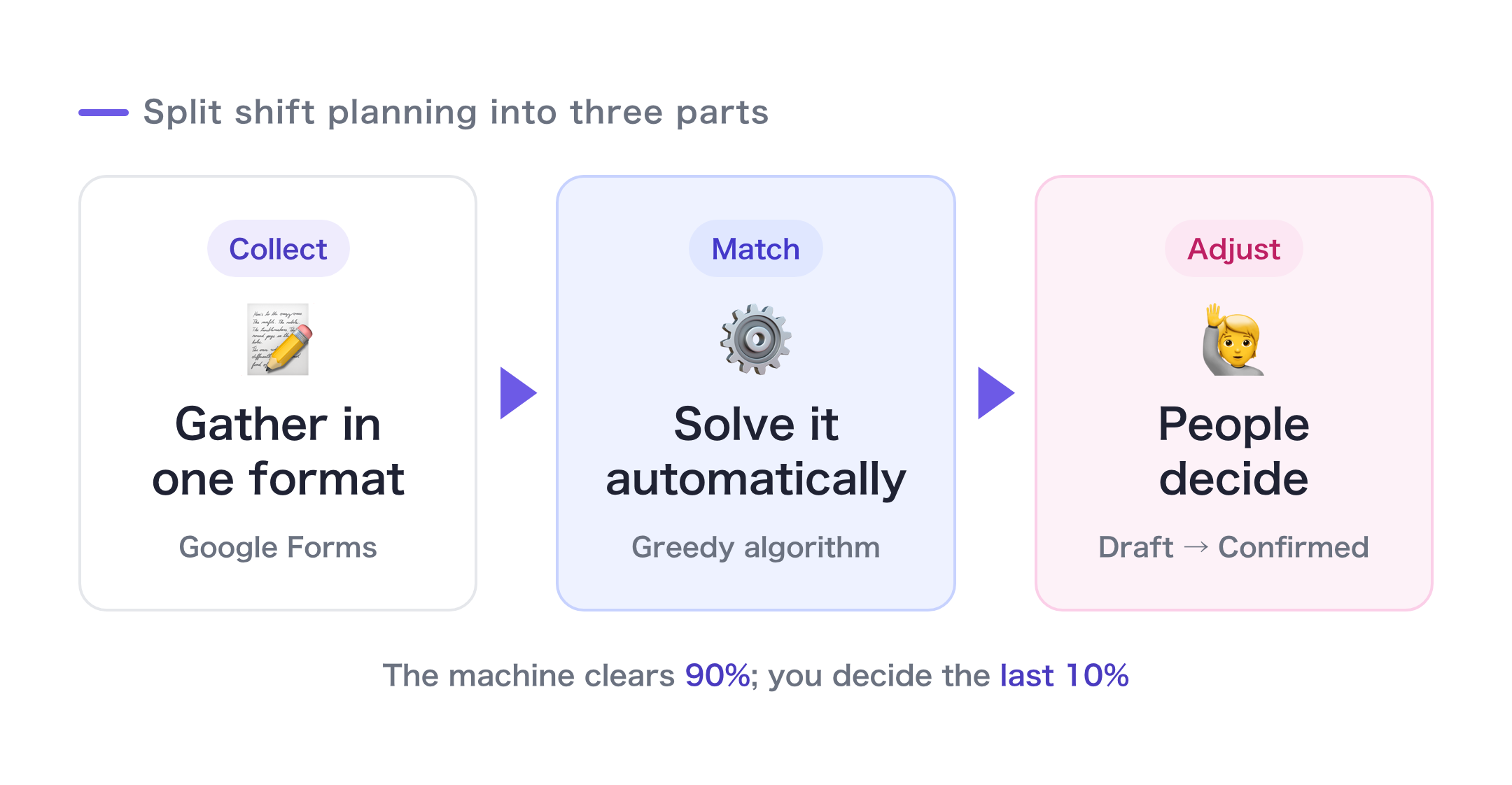
1. Collect requests in a fixed format
Gather requested dates/times, service areas, and requested services in the same shape from everyone. No retyping, no cleanup before you can start matching. A tool you already know — like Google Forms — is plenty.
2. Let a machine do the matching
Feed the collected data through the constraints — area, order of preference, skills, workload caps, conflict avoidance — and produce the assignments automatically. You review the output and adjust only what bothers you.
The key point: automation is not abdication.
Real operations have things the data can't express — "she has to be on this job," "I want these two paired this week." So the machine builds the draft, and the human keeps the final say. That's the condition for it to be usable at all.
Wrapping up
Scheduling is hard because there are too many constraints for a human to solve by hand — not because you're bad at it.
- Collect requests in a fixed format
- Let a machine do the matching
- Keep the final adjustments with a human
Split the job into those three, and the whole thing gets dramatically lighter.
Sunday night, someone messages that the day no longer works. You move that one booking — and nothing else.
I've built exactly that: Shiftaru, a web app that automatically matches requested dates/times against staff availability and lets you fine-tune the result on screen.
🚀 Try it now (officially live · free practice mode)
Nothing to install, no signup. Load sample data in the browser and watch it work.
👉 https://shiftaru.com
Note: some features (importing your real data, exporting results) unlock with a license. Start with practice mode and see how it feels.
Next up: how the automatic matching actually works, with diagrams — How automatic matching works.
- ▶ https://shiftaru.com — free practice mode, no signup
- ▶ Read more: Shiftaru Blog